The Heartland Collection · Vol. 01

The things we kept.

A collector’s guide to American vintage finds, from salt-glazed pantry crocks to the oak boxes that held a family’s recipes.

Explore Collection Specs
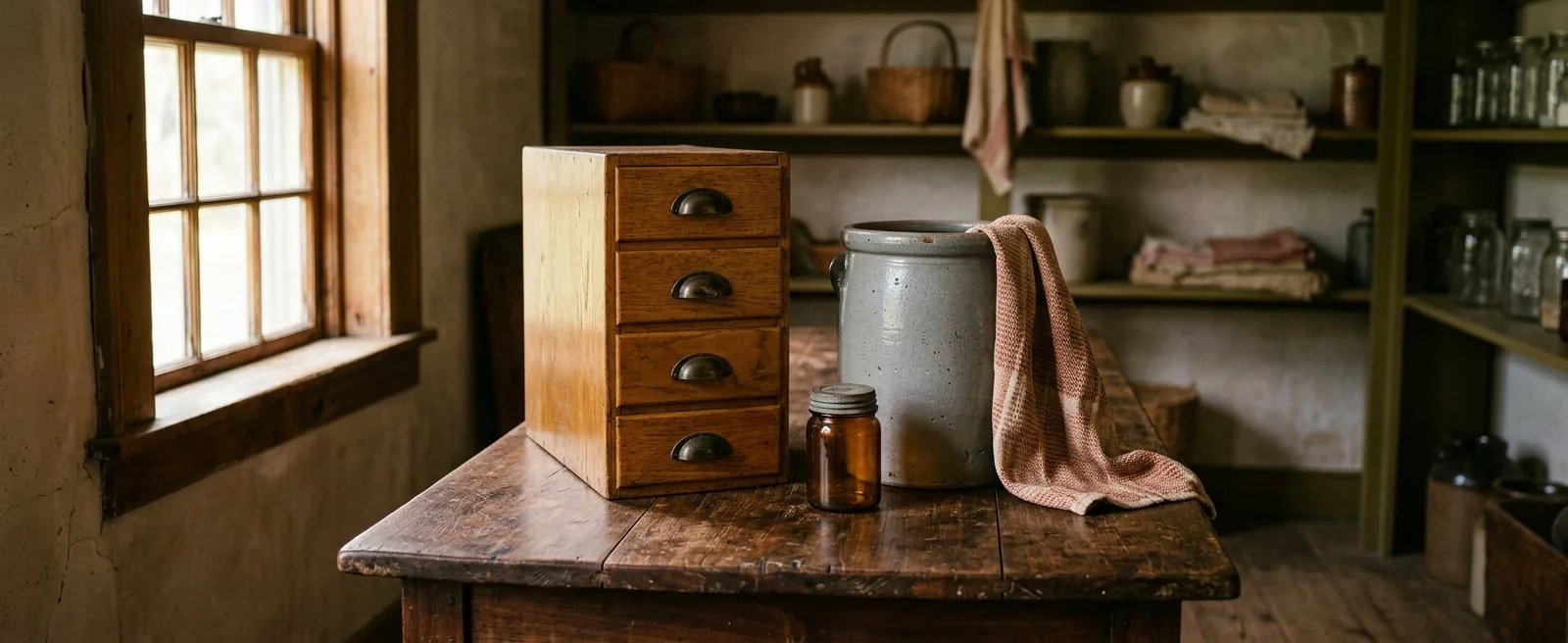
Oak recipe drawers, salt glazed crock and amber preserving jar
Plate 01 / The working pantry American Heartland · Editorial reconstruction

01 / The object directory

From pantry to worktable

Five familiar forms, with material notes and the first things to check when you find one.

5 entries

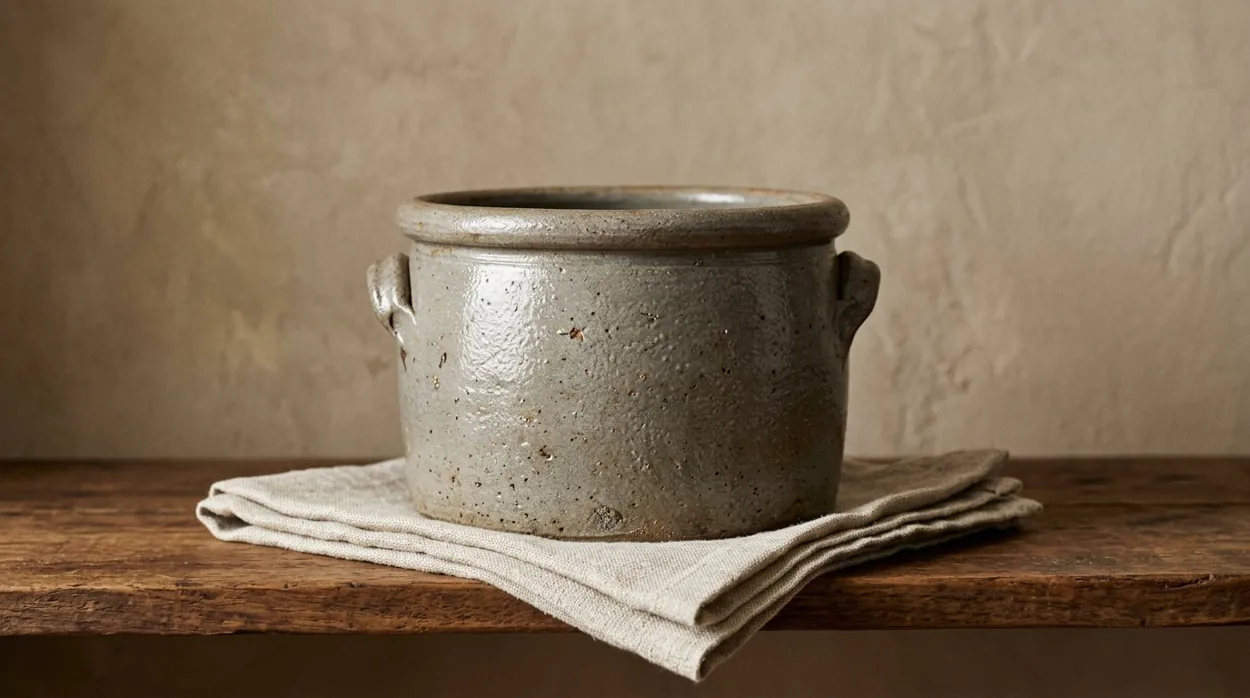
Gray salt glazed stoneware crock on folded oatmeal linen
Plate 02 / Glaze & rim
HL–01 / Stoneware

Salt-glazed pantry crock

The pebbled surface is often called orange peel. A rolled rim and sturdy lug handles are clues to how these heavy vessels were lifted in working kitchens.

Material
Salt-glazed stoneware
Inspect first
Rim, base and handle joins
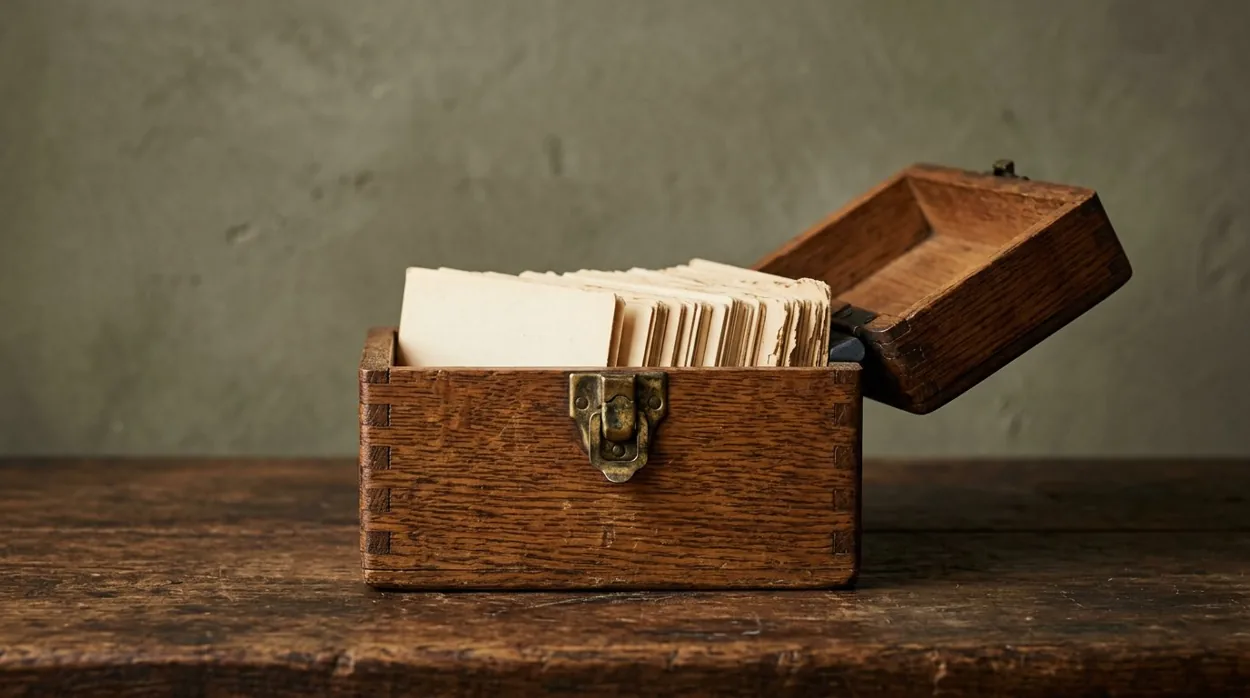
Open oak recipe box with brass latch and unmarked cards
Plate 03 / Joinery & hardware
HL–02 / Wood

Oak recipe file

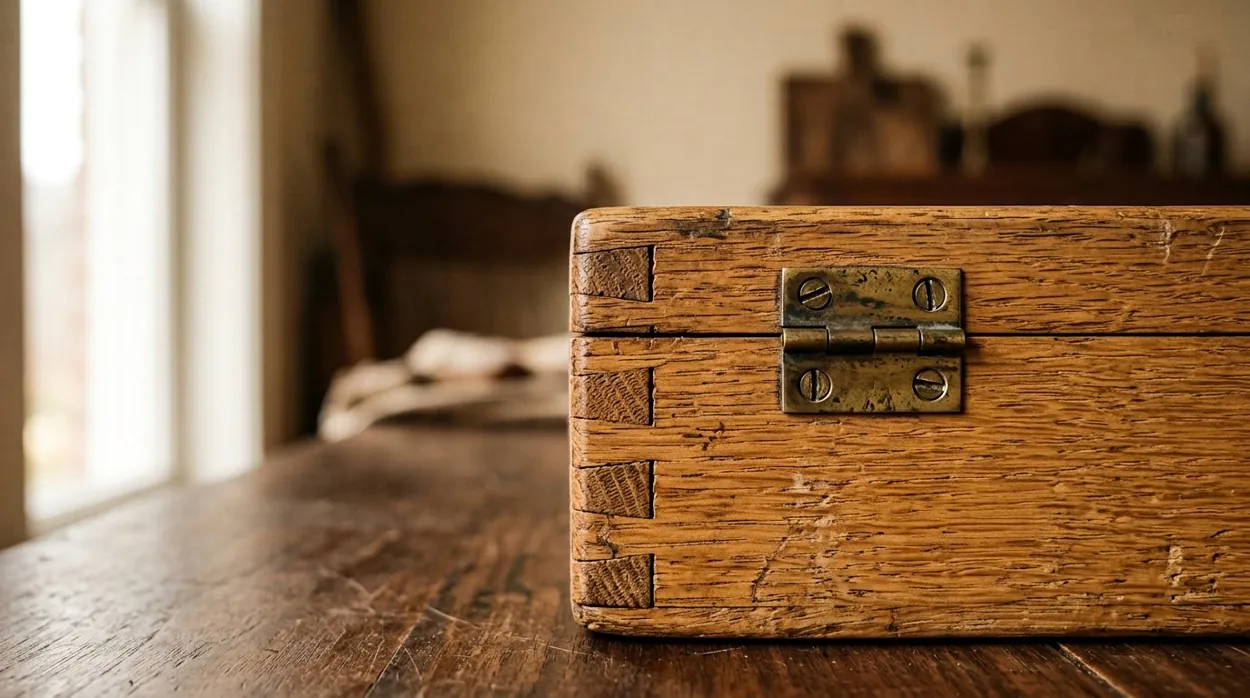
Finger joints and solid brass hardware distinguish many well-made countertop files. Look closely at the hinge screws and at wear around the latch before calling a finish original.

Material
Oak with brass hardware
Inspect first
Finger joints and hinge screws
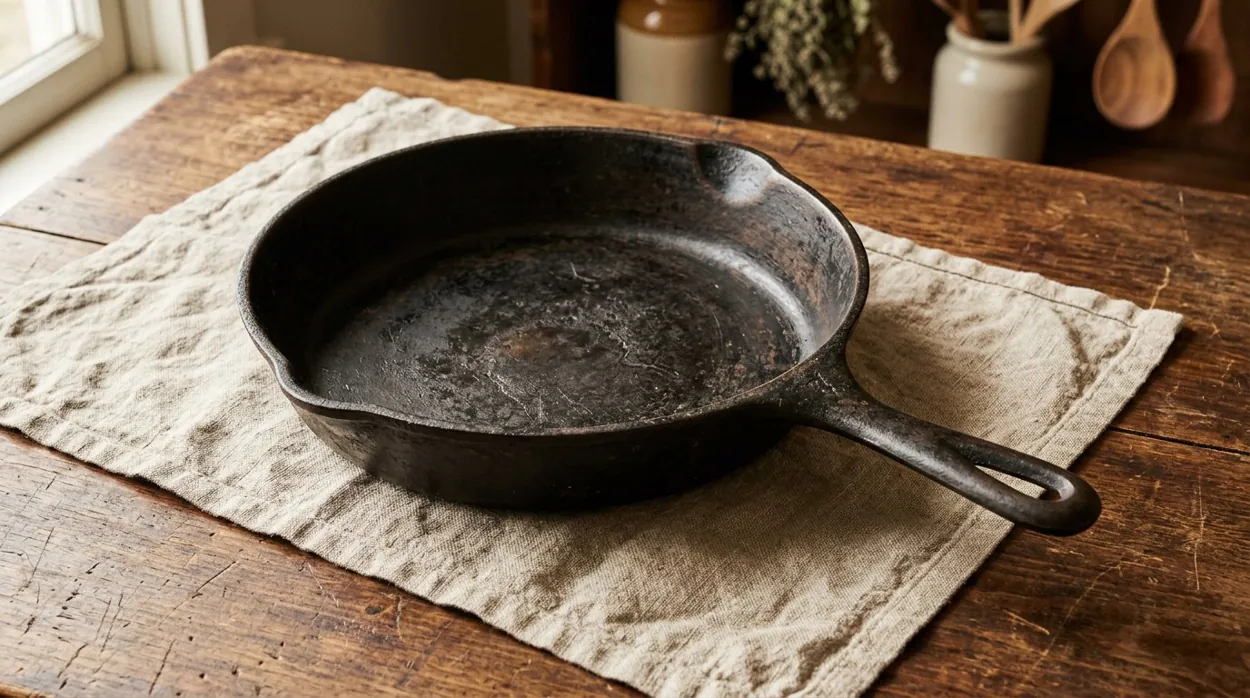
Unmarked cast iron skillet with two pouring lips on linen
Plate 04 / Casting & wear
HL–03 / Cast iron

Double-spout cast-iron skillet

The pouring lips made it easier to tip drippings from either side. Examine flatness on a level surface and check the base for pitting and the handle root for cracks.

Material
Uncoated cast iron
Inspect first
Flatness, pitting and cracks
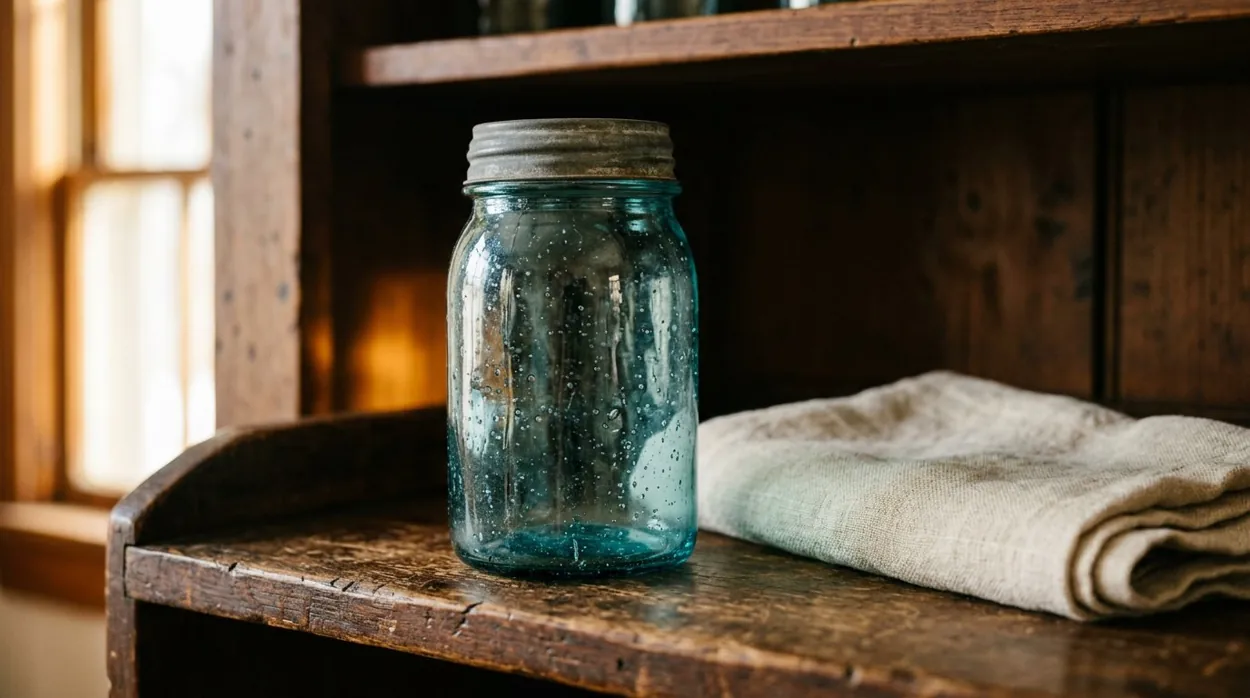
Aqua preserving jar with gray zinc lid on walnut shelf
Plate 05 / Glass & closure
HL–04 / Glass

Aqua preserving jar

Wavy glass and a zinc screw lid recall the home-canning pantry. Look at the lip under angled light, and treat a well-fitting lid as a clue rather than proof that the two started together.

Material
Aqua glass with zinc lid
Inspect first
Lip chips and base cracks
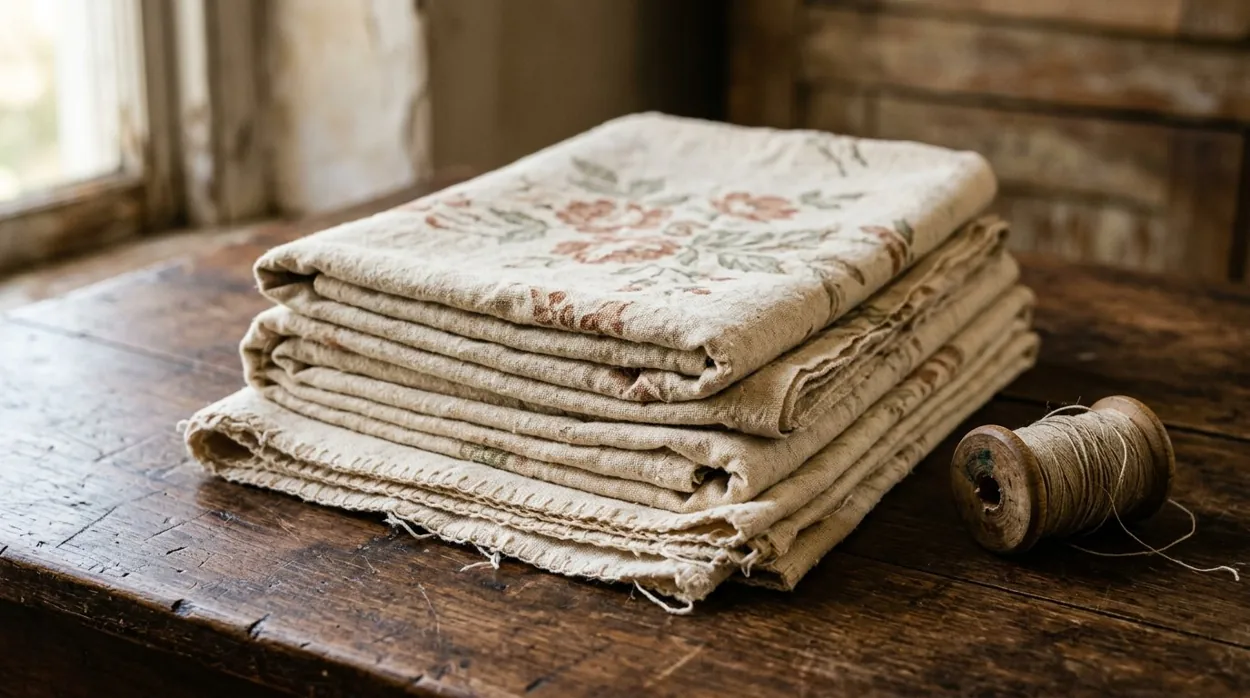
Folded floral feed sack cotton beside a small wooden spool
Plate 06 / Weave & print
HL–05 / Textiles

Feed-sack cotton

The right seam or stitch holes can suggest a printed cotton began as packaging. Treat pattern alone as inconclusive; newer reproductions also use small floral repeats.

Material
Printed woven cotton
Inspect first
Seams, fading and fold lines

02 / Standards & care

Read the wear before you clean.

Darkened finger joints and polished pull edges can tell you how a piece was handled. Start with a close look and a few photographs before reaching for a polish or making a repair.

Examine Key Features
Antique oak box corner with finger joints and brass hinge
Plate 07 / Oak finger joints and hinge

03 / The collector’s workbench

Plan a place for a piece

Choose a material and a display location to get an inspection and placement note.

Material

Display location

Your display note

Stoneware · Open shelf. Inspect the rim, base and handle joins for chips or hairlines. Use a level shelf with enough depth to support the base.

04 / Field questions

Before you bring it home

How do I identify salt glaze on stoneware?

Look for a lightly pebbled sheen under angled light. Similar finishes exist, so consider the clay body and any maker’s mark before identifying the glaze.

What makes an antique repair worth noting?

A stable repair can be part of the object’s history, but it changes how you handle it. Note the location and any movement; photograph it before making care decisions.

Can I use a vintage preserving jar for canning?

Display an old jar with an unknown service history. For home canning, choose modern jars and lids intended for the process and follow a current tested recipe.

What counts as provenance for a household antique?

Dated receipts, family photographs, and ownership records are stronger evidence than an unattributed story or a regional style. Keep copies with the object notes.